

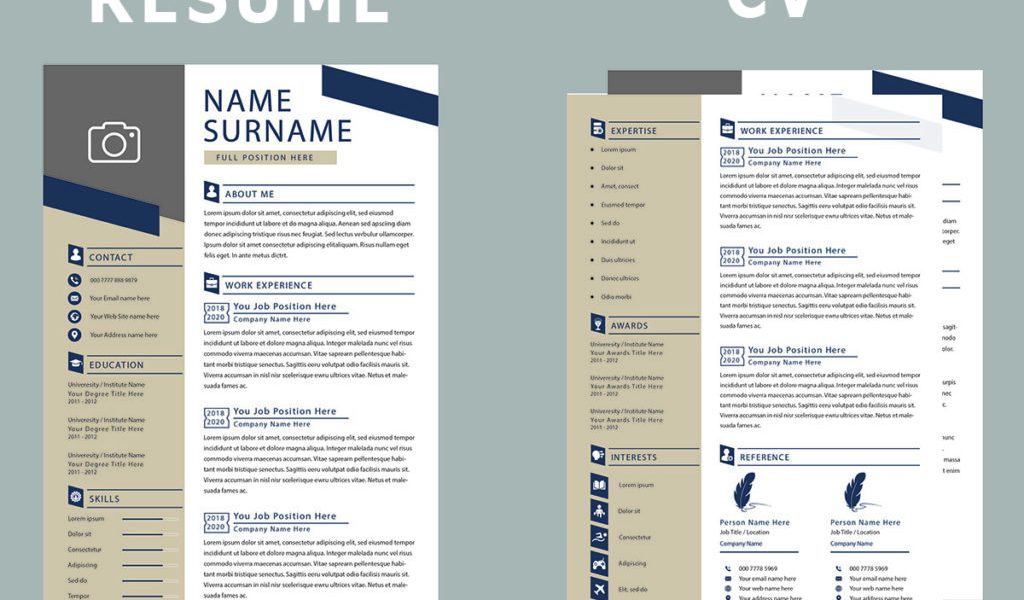
If you’ve ever searched for a job—especially on the web—you’ve probably come across two ubiquitous documents: the CV and the résumé (or resume, if you will, which is how it’s usually misspelled). Some job ads ask for a resume, some ask for a CV, and some seem to use them interchangeably. No wonder it’s confusing!
So what is the real distinction between a CV and a resume? Are they synonymous? Do you need both? And when do you use one over the other?
Here in this article, we’ll all break it down for you in simple English. Whether you’re a new graduate, a job hunter, or just really curious, this primer will spell out the most important distinctions for you, and when to employ each of them—so you’ll never be unsure again.
What is a CV?
CV is an abbreviation for Curriculum Vitae, a Latin phrase that means “course of life.” And literally, that is its name. A CV is a long, detailed document that includes your whole education, career, and even research history.
This is what a CV typically has:
- Full name and contact details
- Professional overview (optional)
- Education (detailed)
- Work experience (detailed)
- Research experience (if any)
- Publications (academic or otherwise)
- Certifications and licenses
- Conferences, presentations, or workshops
- Professional affiliations
- Awards and honors
- Languages
- Skills
- References (optional or available on request)
A CV will normally be several pages in length, especially if you’ve been in work or at university for many years.
What is a Resume?
A resume is a concise, focused summary of your qualifications, abilities, and experience, typically no longer than 1–2 pages. The purpose of a resume is to give the recruiter a rapid overview of your background relevant to the specific job for which you are being considered.
A resume will normally include:
- Contact details
- Professional summary or objective
- Relevant work experience
- Relevant education
- Key skills
- Certifications or accomplishments
- Optional: hobbies, languages, references
Resumes are job-specific. This means every resume should be tweaked or customized based on the position you’re applying for.
The Key Differences: CV vs Resume
Let’s break it down even further with a side-by-side comparison:
| Aspect | CV | Resume |
| Full Meaning | Curriculum Vitae (Course of Life) | French word meaning “summary” |
| Length | Usually 2+ pages (no page limit) | 1–2 pages (max 2 pages) |
| Purpose | Comprehensive record of your academic/professional life | Tailored for a specific job |
| Content | Detailed education, research, publications, full career history | Summary of relevant experience & skills |
| Customization | Static (rarely changes) | Dynamic (changes based on job role) |
| Common in | Academia, research, medical, education, some international jobs | Corporate jobs, business, tech, etc. |
When to Use a CV
Use a CV if you’re
Applying for Academic or Research Positions
Professorships, research fellowships, postgraduate programs, or PhD applications all require a detailed look at your academic history.
Submitting for Medical or Scientific Roles
These fields often expect documentation of research work, clinical experience, and publications.
Applying for Jobs in Europe, Africa, or the Middle East
In most countries outside North America, “CV” is the norm–even if the document turns out to be actually a resume in format.
Developing an All-in-One Career Profile
A CV is best for keeping a continuous record of all you’ve done professionally, which you can pull from when creating customized resumes down the line.
When to Use a Resume
Use a resume if you’re:
Looking for Work in the Corporate World
Tech, finance, HR, marketing, customer service—collections of brief, to-the-point resumes are what most of these professions prefer.
Looking for Work in America or Canada
In North America, resumes are virtually always the demand, not CVs.
Switching Careers or Job Titles
A resume allows you to highlight transferable skills and repackage your experiences to be consistent with a new profession.
Attending Job Fairs or Networking Sessions
A resume is easier to carry and show around—it makes a faster impression.
Do You Need Both?
Yes, ideally. Here’s why:
Your CV is your master document. It has all the information of your professional journey.
Your resume is the tailored one you bring out, modify, and send depending on the job.
Look at your CV as your wardrobe closet, and your resume as the wardrobe you wear to a specific occasion.
Bonus Tip: How to Know What an Employer Is Looking For
Sometimes, job listings use “CV” and “resume” interchangeably—especially in Nigeria, the UK, and other regions. If you’re unsure which one to send, here’s what to do:
Check the job ad carefully: If it asks for a 1- or 2-page CV, they probably mean a resume.
Look at the role: Academic or medical? Send a CV. Corporate or creative? Send a resume.
If in doubt: Ask! There’s nothing wrong with emailing the recruiter for clarification.
Quick Recap
Let’s summarize the difference in simple terms:
A CV is long, detailed, and static. It’s mostly used in academia, research, or international settings.
A resume is short, targeted, and customized. It’s what you’ll use for most corporate or private-sector jobs.
If you’re new to your career, focus on creating a quality resume. As experience accumulates, keep developing a master CV as a future prospect.